• Tides
  • Marks
  • Fish guide
  • Water quality
  • Log
  • Alerts
  • Tides
  • Marks
  • Fish guide
  • Water quality
  • Log
  • Alerts

For planning a fishing trip only, not for navigation. Check an official tide table and local conditions before you go.

How we scoreAdvertiseAdvertising termsPrivacyTerms of use
  • Tides
  • Marks
  • Fish guide
  • Water quality
  • Log
  • Alerts
  • Tides
  • Marks
  • Fish guide
  • Water quality
  • Log
  • Alerts
Fish guide

Ballan wrasse

Labrus bergylta · Wrasse

Also called wrasse, ballan
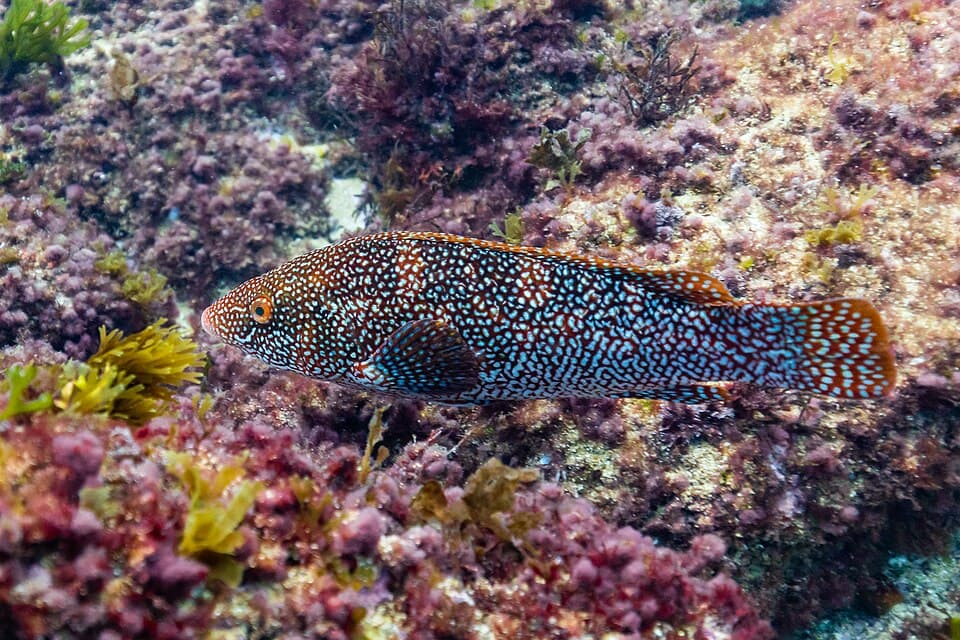
Ballan wrasse
Photo: Diego Delso, CC BY-SA 4.0, via Wikimedia Commons
What fish is this?Identify a fish from a photo

The biggest British wrasse, a heavy-bodied fish of weedy rock that is common off all British and Irish coasts.[1]

How to recognise it

  • Heavy body with a broad head, small mouth and thick lips.[1]
  • Colour varies: reddish or brownish with small white spots, or green with white spots or dark vertical stripes.[1]
  • Young fish are bright emerald green.[1]

When and where

Found over
rocky ground, kelp, piers, breakwaters, rock ledges[2]
Baits
peeler crab, hardback crab, lugworm, ragworm[2]

Sources

  1. MarLIN: Ballan wrasse
  2. Sea Angler: tackle for shore ballan wrasse

These notes are a draft: we gathered them from the sources above and are still checking them. We don't work out best times for this fish yet. The size rules come from the same checked byelaws as every other fish.

Size and bag limit

Minimum size
Sizes vary along the coast. Pick your spot to see the rule there.
Bag limit
None set for the whole UK.
Minimum sizes around the UK
AreaMinimum size
Kent & Essex IFCANone
Sussex IFCA28 cm
Southern IFCA18 cm
Devon & Severn IFCANone
Cornwall IFCANone
Isles of Scilly IFCANot checked yet
North Western IFCANone
North Eastern IFCANot checked yet
Northumberland IFCANot checked yet
Eastern IFCANone
Welsh GovernmentNot checked yet
Scottish GovernmentNot checked yet
DAERA (Northern Ireland)Not checked yet