• Tides
  • Marks
  • Fish guide
  • Water quality
  • Log
  • Alerts
  • Tides
  • Marks
  • Fish guide
  • Water quality
  • Log
  • Alerts

For planning a fishing trip only, not for navigation. Check an official tide table and local conditions before you go.

How we scoreAdvertiseAdvertising termsPrivacyTerms of use
  • Tides
  • Marks
  • Fish guide
  • Water quality
  • Log
  • Alerts
  • Tides
  • Marks
  • Fish guide
  • Water quality
  • Log
  • Alerts
Fish guide

Haddock

Melanogrammus aeglefinus · Cod and relatives
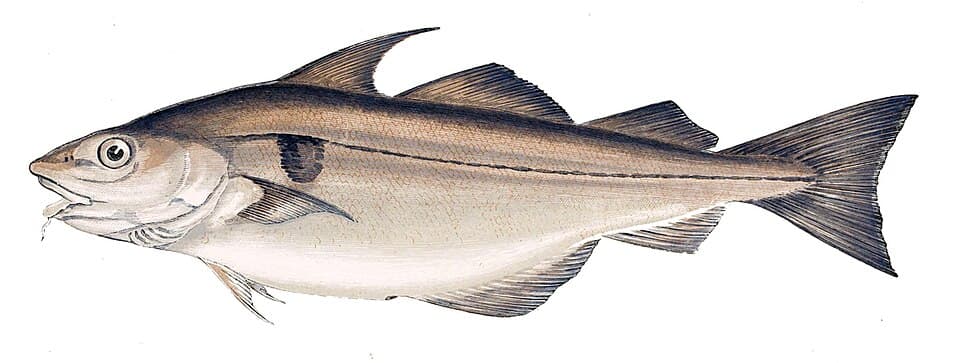
Haddock
Photo: Gervais et Boulart, Public domain, via Wikimedia Commons
What fish is this?Identify a fish from a photo

A cold-water, deep-sea cod relative found mainly in the north of the British Isles. Most are caught offshore, often by anglers targeting cod.[1]

How to recognise it

  • A large dark blotch (thumbprint) above the pectoral fin, just below the lateral line.[2]
  • Three dorsal fins and a small chin barbel; the mouth is small, with the upper jaw longer than the lower.[2]
  • Dark lateral line, silvery grey or brown back and a pale belly.[1]

When and where

Found over
deep water, rock, sand, gravel, shell beds[2]
Baits
worms, shellfish[1]

Sources

  1. British Sea Fishing: Haddock
  2. FishBase: Melanogrammus aeglefinus

These notes are a draft: we gathered them from the sources above and are still checking them. We don't work out best times for this fish yet. The size rules come from the same checked byelaws as every other fish.

Size and bag limit

Minimum size
Sizes vary along the coast. Pick your spot to see the rule there.
Bag limit
None set for the whole UK.
Minimum sizes around the UK
AreaMinimum size
Kent & Essex IFCA30 cm
Sussex IFCA30 cm
Southern IFCANone
Devon & Severn IFCANone
Cornwall IFCANone
Isles of Scilly IFCANot checked yet
North Western IFCA30 cm
North Eastern IFCANot checked yet
Northumberland IFCA30 cm
Eastern IFCA30 cm
Welsh GovernmentNot checked yet
Scottish GovernmentNot checked yet
DAERA (Northern Ireland)Not checked yet