Spotted ray
Raja montagui · Rays and skates
Also called homelyn
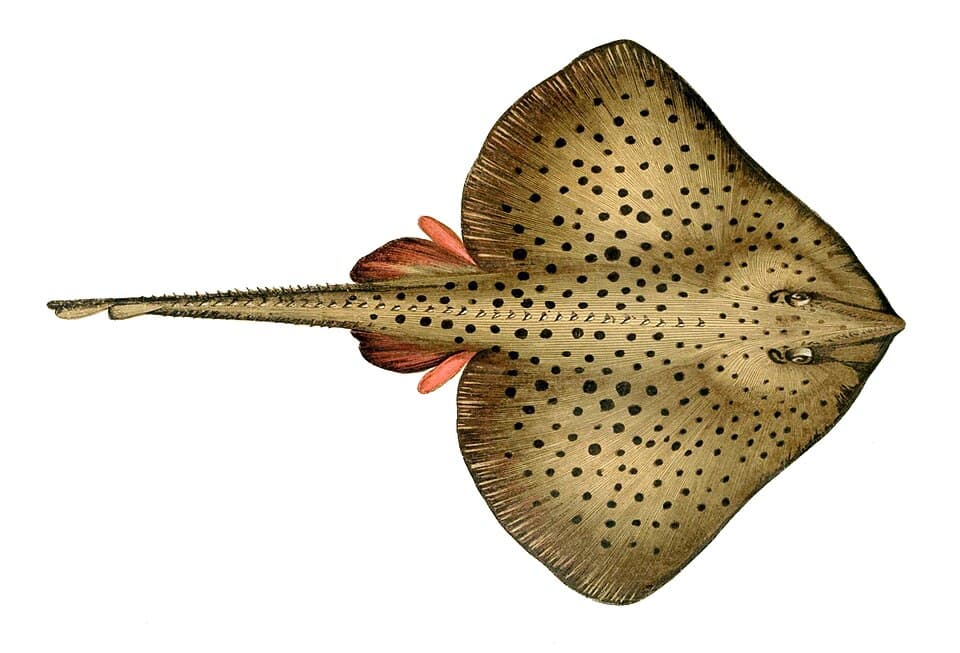
A small ray found around the UK and one of the commonest in the English Channel. Anglers meet it from spring to autumn over mixed ground.[1]
How to recognise it
- Many dark spots over the back, but not out to the wing edges, which stay plain brown or yellow. Blonde rays have spots right to the wing tips.[1]
- Some have an eyespot on each wing, made of a ring of dark spots round a pale centre. Cuckoo rays have a solid black and yellow eyespot instead.[2]
- Short snout, rounded wing tips and a single row of about 20 to 50 thorns down the midline. The skin is nearly smooth in young fish and prickly in big adults.[2]
When and where
- Season
- Mar–Nov[3]
- Found over
- hard ground, sand, gravel[3]
- Baits
- herring, mackerel, sandeel, razorfish, clams, mussel, peeler crab, squid, cuttlefish[3]
Appears in early spring and stays plentiful through summer and autumn.[3]
Sources
- Wildlife Trusts: Spotted ray
- FishBase: Raja montagui
- Fishing Wales: Welsh ray fishing, five species to fish for
These notes are a draft: we gathered them from the sources above and are still checking them. We don't work out best times for this fish yet. The size rules come from the same checked byelaws as every other fish.