• Tides
  • Fish
  • Marks
  • Fish guide
  • Water quality
  • Log
  • Alerts
  • Tides
  • Fish
  • Marks
  • Fish guide
  • Water quality
  • Log
  • Alerts

For planning a fishing trip only, not for navigation. Check an official tide table and local conditions before you go.

How we scoreAdvertiseAdvertising termsPrivacyTerms of use
  • Tides
  • Fish
  • Marks
  • Fish guide
  • Water quality
  • Log
  • Alerts
  • Tides
  • Fish
  • Marks
  • Fish guide
  • Water quality
  • Log
  • Alerts
Fish guide

Thornback ray

Raja clavata · Rays and skates

Also called thornback, roker, ray
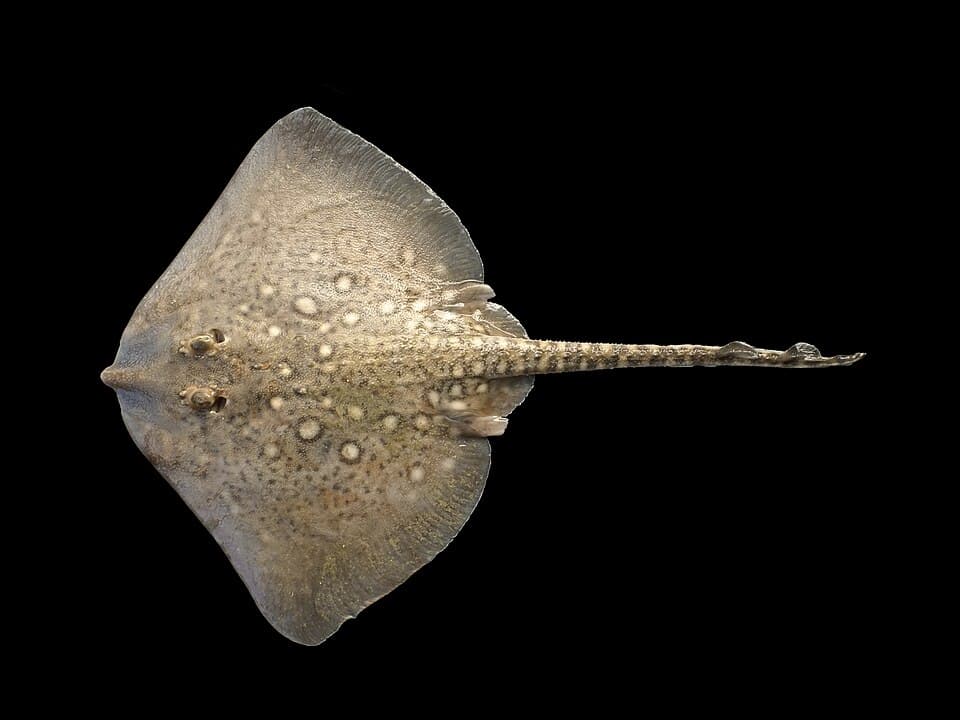
Thornback ray
Photo: Hans Hillewaert, CC BY-SA 4.0, via Wikimedia Commons

The Thames Estuary's signature spring fish, feeding over mud, sand and gravel channels.

How to recognise it

  • A diamond-shaped body, brown with pale and dark blotches.
  • Rows of large hooked thorns (bucklers) along the back and tail; adults have them on the wings too.
  • The underside is white.

When and where

Best months
Mar–Nov
Found over
estuary channel, mud, sand, gravel
Baits
sandeel, peeler crab, mackerel, herring, squid

Caught all year, with April to June the peak in the Thames.

Best times for thornback ray near you

Sources

  • FishBase: Raja clavata
  • Cefas, Catchwise: A Survey of Marine Recreational Fishing Activity in England and Wales (2026)
  • General UK sea-angling guidance (to be verified)

This profile is a draft: we're still checking it against published studies.

Size and bag limit

Minimum size
Sizes vary along the coast. Pick your spot to see the rule there.
Bag limit
None set for the whole UK.
Minimum sizes around the UK
AreaMinimum size
Kent & Essex IFCA40 cm
Sussex IFCA40 cm
Southern IFCA40 cm
Devon & Severn IFCANone
Cornwall IFCANone
Isles of Scilly IFCANot checked yet
North Western IFCA45 cm
North Eastern IFCANot checked yet
Northumberland IFCANot checked yet
Eastern IFCANone
Welsh GovernmentNot checked yet
Scottish GovernmentNot checked yet
DAERA (Northern Ireland)Not checked yet